What the SIA’s new Impact Measurement Standards mean for social investment
The standards give government agencies a clearer framework for deciding what evidence they need, how outcomes should be measured, and how that evidence can be used to improve programmes and services.
.jpg)

One of the most important features of the standards is that they do not prescribe one measurement method for every programme.
One of the most important features of the standards is that they do not prescribe one measurement method for every programme.
The Social Investment Agency (SIA) has released new Impact Measurement Standards to bring greater consistency to how government agencies measure outcomes and impact and use that evidence to assess the effectiveness of government social spending.
The standards give agencies a clearer framework for deciding what evidence they need, how outcomes should be measured, and how that evidence can be used to improve programmes and services. They are intended to help agencies understand what works, for whom, and in what circumstances.
The standards apply to government agencies delivering or commissioning programmes and services. While they are not intended to directly apply to most charities, community organisations or other service providers, they are likely to influence future funding, commissioning and evidence expectations. Agencies are expected to begin applying the standards across their portfolios, while keeping the method and level of evidence proportionate to the programme and the decision being made.
The standards signal that impact evidence is likely to become a requirement in future government funding, commissioning and investment decisions.
For government agencies, this means considering the evidence needed to support programme design, commissioning, investment and resource allocation. For organisations delivering government-funded services, it is likely to shape future expectations around demonstrating what changed, for whom, and how their work contributed.
You can read the full Impact Measurement Standards and companion guidance on the Social Investment Agency website.
Three levels of impact evidence
The standards set out three levels of evidence.
Level 1: An evidence-based Theory of Change
Level 1 asks whether there is a clear and credible explanation of how a programme is intended to create change.
This includes connecting the programme’s inputs, activities and outputs with its intended short-, medium- and long-term outcomes. The evidence, assumptions, limitations and uncertainties underpinning that logic should also be clear.
In practical terms:
Can we clearly explain how this programme is intended to improve outcomes, and is that explanation supported by evidence?
This is the foundation for good impact measurement. Without a clear understanding of how change is intended to happen, it is difficult to determine what should be measured or what the resulting evidence means.
Level 2: Evidence of changes in outcomes or impact
Level 2 moves beyond what a programme delivered to examine what changed for the people, whānau or communities receiving the service.
It requires meaningful outcome measures and data capable of showing changes over time, and for whom. It also asks organisations to consider how the programme may have contributed to the results, while recognising that other influences may also have played a role.
The central question becomes:
Can we demonstrate what changed and provide credible evidence that the programme contributed to that change?
This distinction matters. Measures such as the number of people supported, sessions delivered or resources distributed remain important, but they do not tell us whether people experienced improved outcomes and how they've engaged in the programme to achieve these.
Level 3: Stronger evidence of contribution or causation
Level 3 builds on Level 1 and 2 and considers how confidently an observed change can be attributed to a programme or intervention.
Depending on the programme and the decision being made, this can be resource intensive and may involve comparison groups, linked or longitudinal data, advanced research methods, analysis of alternative explanations and a detailed, replicable methodology.
The question is:
How confidently can we demonstrate that the programme contributed to, or caused, the outcomes observed?
Level 3 will not be appropriate or feasible for every programme. It is most relevant where stronger evidence of contribution or causation is needed to support a significant decision.
The goal is not Level 3 everywhere
One of the most important features of the standards is that they do not prescribe one measurement method for every programme.
- A new or emerging programme may initially need a stronger Theory of Change, clearer outcomes and a practical data collection plan.
- An established service may be ready to measure changes in participant outcomes and understand the social value it creates.
- A large, high-risk or strategically important investment may warrant more advanced research to test contribution or causation.
The objective should not be to apply the most complex methodology possible. It should be to develop evidence that is credible, proportionate and useful for the decision at hand.
Key takeaways for social service providers
You don't need to rush into a complex evaluation or immediately change your impact measurement approach. However, the new standards do signal where government commissioning and investment conversations are heading.
There are a few practical questions worth considering:
- Do we have a clear and evidence-based understanding of the outcomes we are trying to achieve?
- Are we collecting the right data to demonstrate meaningful change for the people and whānau we support?
- Can we confidently explain how our services contribute to those outcomes?
- Are we measuring what matters, or simply what is easiest to count?
- If government or a funder asked us tomorrow what changed for participants over time, could we answer that question?
- Do we understand what evidence gaps currently exist across our programmes and services?
For organisations, the next step may simply be strengthening their Theory of Change, improving data collection practices, or building a clearer understanding of the outcomes they are already creating.
The standards reinforce that good impact measurement is not about collecting more data. It's about collecting the right evidence to support better decisions and stronger outcomes for communities.
Strengthening your impact evidence
For over six years, ImpactLab has worked with government agencies, funders and service providers across Aotearoa to understand, measure and communicate the difference their programmes make.
Having measured more than 380 programmes and analysed over $1 billion in social investment, we have seen first-hand what strengthens impact evidence, where organisations commonly struggle, and what makes measurement genuinely useful for funding, commissioning and programme improvement.
Explore Foundations, GoodMeasure and ImpactLab’s wider impact measurement services.
Let’s chat
Whether you’re just starting to think about impact measurement or need a clearer view of the difference your programme is making, we’re here to help you measure, understand and grow your impact.
Get in touch with the ImpactLab team - we’d love to hear from you.
Image cred: Sebastian Schuster, Unsplash
The Social Investment Agency (SIA) has released new Impact Measurement Standards to bring greater consistency to how government agencies measure outcomes and impact and use that evidence to assess the effectiveness of government social spending.
The standards give agencies a clearer framework for deciding what evidence they need, how outcomes should be measured, and how that evidence can be used to improve programmes and services. They are intended to help agencies understand what works, for whom, and in what circumstances.
The standards apply to government agencies delivering or commissioning programmes and services. While they are not intended to directly apply to most charities, community organisations or other service providers, they are likely to influence future funding, commissioning and evidence expectations. Agencies are expected to begin applying the standards across their portfolios, while keeping the method and level of evidence proportionate to the programme and the decision being made.
The standards signal that impact evidence is likely to become a requirement in future government funding, commissioning and investment decisions.
For government agencies, this means considering the evidence needed to support programme design, commissioning, investment and resource allocation. For organisations delivering government-funded services, it is likely to shape future expectations around demonstrating what changed, for whom, and how their work contributed.
You can read the full Impact Measurement Standards and companion guidance on the Social Investment Agency website.
Three levels of impact evidence
The standards set out three levels of evidence.
Level 1: An evidence-based Theory of Change
Level 1 asks whether there is a clear and credible explanation of how a programme is intended to create change.
This includes connecting the programme’s inputs, activities and outputs with its intended short-, medium- and long-term outcomes. The evidence, assumptions, limitations and uncertainties underpinning that logic should also be clear.
In practical terms:
Can we clearly explain how this programme is intended to improve outcomes, and is that explanation supported by evidence?
This is the foundation for good impact measurement. Without a clear understanding of how change is intended to happen, it is difficult to determine what should be measured or what the resulting evidence means.
Level 2: Evidence of changes in outcomes or impact
Level 2 moves beyond what a programme delivered to examine what changed for the people, whānau or communities receiving the service.
It requires meaningful outcome measures and data capable of showing changes over time, and for whom. It also asks organisations to consider how the programme may have contributed to the results, while recognising that other influences may also have played a role.
The central question becomes:
Can we demonstrate what changed and provide credible evidence that the programme contributed to that change?
This distinction matters. Measures such as the number of people supported, sessions delivered or resources distributed remain important, but they do not tell us whether people experienced improved outcomes and how they've engaged in the programme to achieve these.
Level 3: Stronger evidence of contribution or causation
Level 3 builds on Level 1 and 2 and considers how confidently an observed change can be attributed to a programme or intervention.
Depending on the programme and the decision being made, this can be resource intensive and may involve comparison groups, linked or longitudinal data, advanced research methods, analysis of alternative explanations and a detailed, replicable methodology.
The question is:
How confidently can we demonstrate that the programme contributed to, or caused, the outcomes observed?
Level 3 will not be appropriate or feasible for every programme. It is most relevant where stronger evidence of contribution or causation is needed to support a significant decision.
The goal is not Level 3 everywhere
One of the most important features of the standards is that they do not prescribe one measurement method for every programme.
- A new or emerging programme may initially need a stronger Theory of Change, clearer outcomes and a practical data collection plan.
- An established service may be ready to measure changes in participant outcomes and understand the social value it creates.
- A large, high-risk or strategically important investment may warrant more advanced research to test contribution or causation.
The objective should not be to apply the most complex methodology possible. It should be to develop evidence that is credible, proportionate and useful for the decision at hand.
Key takeaways for social service providers
You don't need to rush into a complex evaluation or immediately change your impact measurement approach. However, the new standards do signal where government commissioning and investment conversations are heading.
There are a few practical questions worth considering:
- Do we have a clear and evidence-based understanding of the outcomes we are trying to achieve?
- Are we collecting the right data to demonstrate meaningful change for the people and whānau we support?
- Can we confidently explain how our services contribute to those outcomes?
- Are we measuring what matters, or simply what is easiest to count?
- If government or a funder asked us tomorrow what changed for participants over time, could we answer that question?
- Do we understand what evidence gaps currently exist across our programmes and services?
For organisations, the next step may simply be strengthening their Theory of Change, improving data collection practices, or building a clearer understanding of the outcomes they are already creating.
The standards reinforce that good impact measurement is not about collecting more data. It's about collecting the right evidence to support better decisions and stronger outcomes for communities.
Strengthening your impact evidence
For over six years, ImpactLab has worked with government agencies, funders and service providers across Aotearoa to understand, measure and communicate the difference their programmes make.
Having measured more than 380 programmes and analysed over $1 billion in social investment, we have seen first-hand what strengthens impact evidence, where organisations commonly struggle, and what makes measurement genuinely useful for funding, commissioning and programme improvement.
Explore Foundations, GoodMeasure and ImpactLab’s wider impact measurement services.
Let’s chat
Whether you’re just starting to think about impact measurement or need a clearer view of the difference your programme is making, we’re here to help you measure, understand and grow your impact.
Get in touch with the ImpactLab team - we’d love to hear from you.
Image cred: Sebastian Schuster, Unsplash
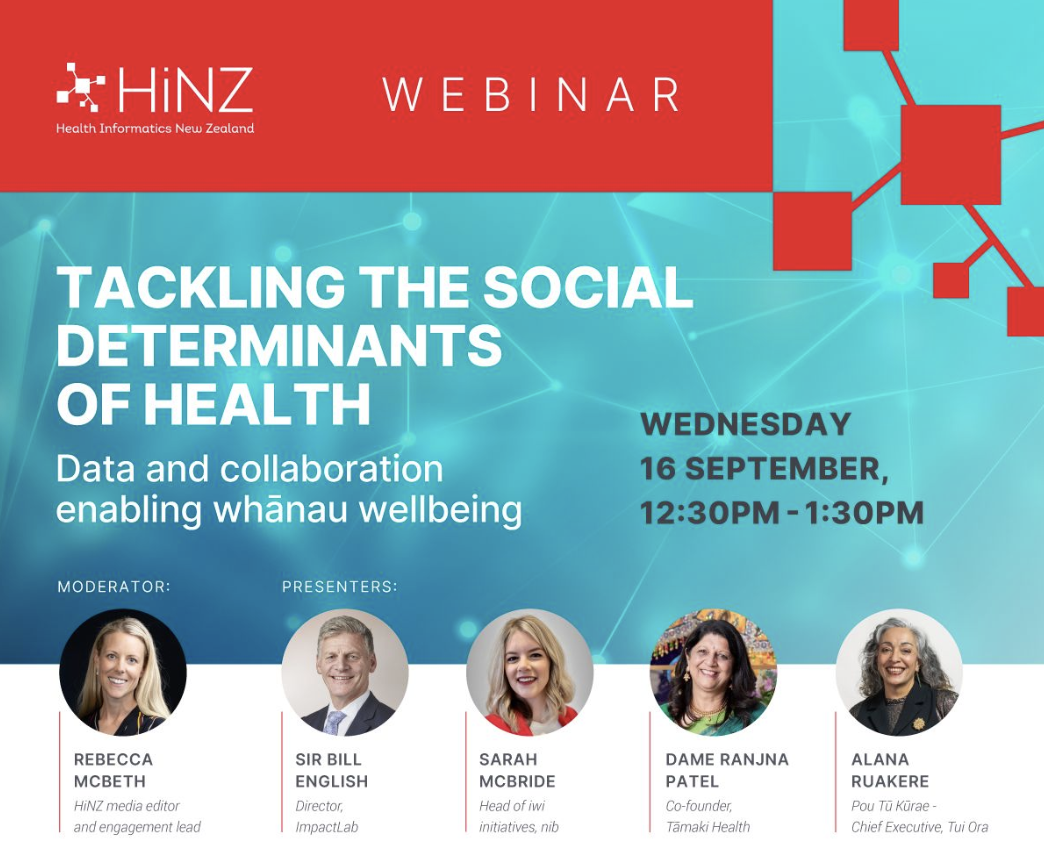
Webinar: HiNZ - Tackling the social determinants of health
ImpactLab Founder Sir Bill English is joining an expert panel to discuss how better connected data can drive more effective partnerships and evidence-informed decision making across the health and social care sectors.
.jpg)
Improving impact starts with using your data
The ‘use to improve’ principle is simple. It says: the best way to improve your data is to use the data you already have. Read on to find out more!
.png)
Practical tips for using your GoodMeasure report to secure funding
Many organisations measure their impact but struggle to talk about data findings with confidence. Here's what actually works, with practical tips from funders, fundraising experts, and charities who've done it.
What the SIA’s new Impact Measurement Standards mean for social investment
The standards give government agencies a clearer framework for deciding what evidence they need, how outcomes should be measured, and how that evidence can be used to improve programmes and services.
Get in touch
We help impact organisations know, show and grow their social impact. Let’s work together to do good, better!


