Skinny Jump: What a decade of data tells us
We partnered with Spark to explore ten years of data from Skinny Jump, its subsidised broadband programme.


"Internet is no longer a nice to have. It's how children learn, people find work, access healthcare and stay connected with their communities." Laurence Zwimpfer, Digital Inclusion Alliance Aotearoa
"Internet is no longer a nice to have. It's how children learn, people find work, access healthcare and stay connected with their communities." Laurence Zwimpfer, Digital Inclusion Alliance Aotearoa
Skinny Jump was built on a simple belief: no family should miss out because they cannot afford to get online. Over the past decade, it has grown from a small pilot supporting families without internet access into a nationwide digital inclusion programme.
It offers affordable prepaid broadband, a free modem and free monthly data, with no contracts or credit checks. A nationwide network of trusted community organisations helps people sign up and get connected.
Almost 100,000 households have accessed Skinny Jump since 2016, and around 39,000 are connected through the programme today. Between 13,000 and 16,000 new households have kept signing up every year since 2021, and the 2023 Census estimated that around 170,000 households were still without internet access.
The need for affordable connectivity hasn't gone away.
"Internet is no longer a nice to have. It's how children learn, people find work, access healthcare and stay connected with their communities." Laurence Zwimpfer, Operations Director and Trustee, Digital Inclusion Alliance Aotearoa
What the data shows
- Affordability is still the biggest barrier. 32% of connected households use only the free 15GB monthly data allowance.
- Community-led delivery works. In 2020, community partners helped with 43% of sign-ups. By 2026, that had risen to 96%. People connect through organisations they already know and trust.
- Digital exclusion overlaps with other kinds of hardship. One in four households has more than one form of disadvantage recorded. As national unemployment rose from 3.4% to 5.6% between 2023 and 2026, unemployment's share of recorded disadvantage grew from 14% to 17%.
"Digital equity is not achieved through connectivity alone. It requires affordable services, trusted local support, and strong partnerships between communities, government, industry, and funders." The Skinny Jump team, Spark
Read the full Skinny Jump 10 Year Impact Data Report
Skinny Jump: What a decade of data tells us
We partnered with Spark to explore ten years of data from Skinny Jump, its subsidised broadband programme.
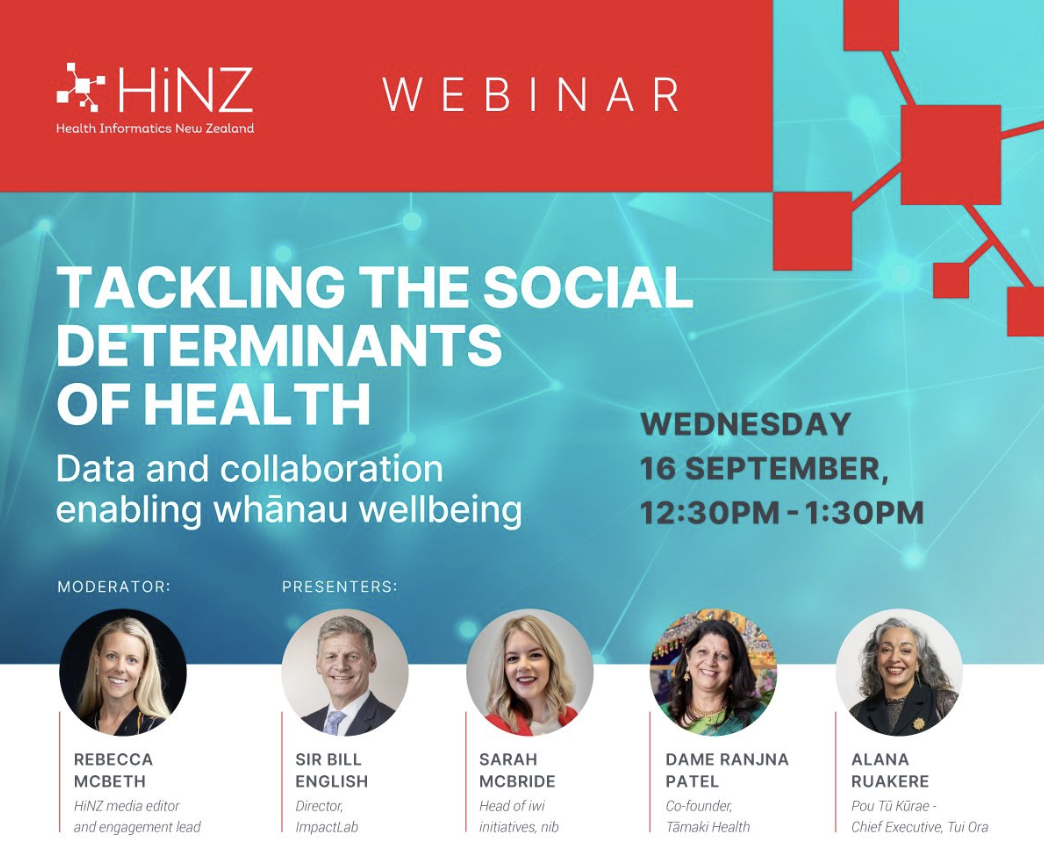
Webinar: HiNZ - Tackling the social determinants of health
ImpactLab Founder Sir Bill English is joining an expert panel to discuss how better connected data can drive more effective partnerships and evidence-informed decision making across the health and social care sectors.

What the SIA’s new Impact Measurement Standards mean for social investment
The standards give government agencies a clearer framework for deciding what evidence they need, how outcomes should be measured, and how that evidence can be used to improve programmes and services.

Practical tips for using your GoodMeasure report to secure funding
Many organisations measure their impact but struggle to talk about data findings with confidence. Here's what actually works, with practical tips from funders, fundraising experts, and charities who've done it.
Get in touch
We help impact organisations know, show and grow their social impact. Let’s work together to do good, better!