Practical tips for using your GoodMeasure report to secure funding
Many organisations measure their impact but struggle to talk about data findings with confidence. Here's what actually works, with practical tips from funders, fundraising experts, and charities who've done it.
.png)

Fundraising in the social sector has never been more competitive. More organisations are chasing fewer unrestricted pots, AI tools are accelerating the volume of applications funders receive, and expectations around evidence and accountability are rising across the board, from government, philanthropic funders, and corporates alike.
Many organisations already have some good evidence about the difference they're making. The challenge is in the translation and knowing how to take what you have and turn it into something funders understand, trust, and act on.
Here's what works.
1. Understand what funders are actually looking for
Funders aren't reading your application for comprehensiveness; they're reading it for confidence.
When impact evidence lands well, it does three things:
- It shows you're monitoring your own performance
- It demonstrates you know what you're doing is working
- It answers the question every funder is asking: why should I fund you over everyone else?
The shift from outputs to outcomes matters here more than most organisations realise. Many funders ask for outcome measures but give examples that are clearly outputs. If you can show genuine long-term impact data, you're already exceeding expectations.
2. Do your research: one size doesn't fit all
No two funders are the same. You can't assume all philanthropic funders want the same approach, or that all government agencies do either.
Before you pitch, make sure you're clear on the following:
- What is their giving intention, i.e. what do they actually want to achieve with this funding?
- Is there genuine alignment between their objectives and your mission?
- What's their background? Do they lead with heart, or do they want the numbers first?
A funder from a commercial background may want the SROI (social return on investment) figure before they'll engage with the story. A funder motivated by community connection might need the story first before the numbers will mean anything to them. Both are likely to eventually need both, you're just deciding where to start.
For government specifically, go deeper. Look at the minister's background, read their speeches, check their annual reports and briefings. Government is increasingly asking: who will benefit, what benefits will they experience, when will the benefits accrue, and what's the SROI? Match your language to theirs.
Watch our webinar on Making Impact Evidence Work Harder for Fundraising.
3. Know your 'hero slides'
A GoodMeasure report is comprehensive, and that's exactly why you shouldn't lead with all of it.
Tuhi Leef, CEO of Pillars, puts it simply: find your hero slides and go straight to them. For Pillars, that's the results summary and the trend analysis. Two slides. Everything else is context. The instinct to lead with your SROI figure is understandable. It's a single, clear number that's easy to grasp, but whether you open with it depends entirely on your audience. For some funders it's the hook and for others, it’s better to lead with the story first and let the number land as the proof.
What you should always have is both a compelling story about the people you work with, backed up by independent evidence of the difference you're making. Neither works as well without the other.
A practical tip from Tuhi: carry the report with you. Take it to coffee meetings, send it alongside your annual report, have it ready when someone asks. More than once, an unexpected question, "have you done an SROI?" has been answered on the spot. That readiness builds credibility.
Read Pillars Ka Pou Whakahau's GoodMeasure Renewal report.
4. If your results are modest, don't hide from it
Not every SROI comes back with a headline-grabbing number. That's okay, and it's not a reason to shelve the report.
A modest result can tell you something important: the data doesn't yet reflect the extent of value being delivered. That's critical strategic information. The right response is to take it to your board, examine what needs to change, and come back to funders with a clear account of what you've learned and what you're doing about it. Transparency like that builds more trust than a big number with no story behind it. Funders want to invest in organisations that learn and improve, and a modest result with a credible improvement plan is a fundable position.
One example: an organisation had results showing they weren't delivering enough contact time to create sustained change. Rather than burying the finding, they used it to make the case to a funder for more resource, for example, here's what the evidence shows, here's what we could achieve with additional investment. The constraint became the conversation starter.
5. Use evidence to build relationships, not just win grants
The organisations getting multi-year funding aren't just submitting better applications. They're using evidence to deepen ongoing funder relationships over time.
Pillars saw this directly. After sharing their GoodMeasure Renewal findings – including a 40% improvement in their SROI – existing funders who had previously offered one-off grants started conversations about multi-year funding. The evidence didn't just win new support. It changed the nature of the relationship.
For government funders in particular, impact evidence signals something beyond the numbers: it shows organisational maturity and readiness to grow. If you're making the case for scaling or sustaining capacity, evidence of improvement over time is often more compelling than a single strong result.
The question to ask yourself isn't just "how do I use this in my next application?" It's "how do I use this to keep building trust with the funders I already have?"
Start before you're ready
One of the most common reasons organisations don't use their impact evidence well is that they're waiting until they have everything perfect. The data isn't complete. The methodology isn't tight enough. The results aren't as strong as they'd hoped.
Don't wait. Start with what you have, be transparent about what you're still learning, and build from there. Most organisations have more usable evidence than they think, they just need help identifying which parts of it to lead with.
That's exactly what we're here for.
Having measured more than 380 programmes and analysed over $1 billion in social investment, we have seen first-hand what strengthens impact evidence, where organisations commonly struggle, and what makes measurement genuinely useful for funding, commissioning and programme improvement.
Explore Foundations, GoodMeasure and ImpactLab’s wider impact measurement services.
Let’s chat
Whether you’re just starting to think about impact measurement or need a clearer view of the difference your programme is making, we’re here to help you measure, understand and grow your impact.
Get in touch with the ImpactLab team - we’d love to hear from you.
Fundraising in the social sector has never been more competitive. More organisations are chasing fewer unrestricted pots, AI tools are accelerating the volume of applications funders receive, and expectations around evidence and accountability are rising across the board, from government, philanthropic funders, and corporates alike.
Many organisations already have some good evidence about the difference they're making. The challenge is in the translation and knowing how to take what you have and turn it into something funders understand, trust, and act on.
Here's what works.
1. Understand what funders are actually looking for
Funders aren't reading your application for comprehensiveness; they're reading it for confidence.
When impact evidence lands well, it does three things:
- It shows you're monitoring your own performance
- It demonstrates you know what you're doing is working
- It answers the question every funder is asking: why should I fund you over everyone else?
The shift from outputs to outcomes matters here more than most organisations realise. Many funders ask for outcome measures but give examples that are clearly outputs. If you can show genuine long-term impact data, you're already exceeding expectations.
2. Do your research: one size doesn't fit all
No two funders are the same. You can't assume all philanthropic funders want the same approach, or that all government agencies do either.
Before you pitch, make sure you're clear on the following:
- What is their giving intention, i.e. what do they actually want to achieve with this funding?
- Is there genuine alignment between their objectives and your mission?
- What's their background? Do they lead with heart, or do they want the numbers first?
A funder from a commercial background may want the SROI (social return on investment) figure before they'll engage with the story. A funder motivated by community connection might need the story first before the numbers will mean anything to them. Both are likely to eventually need both, you're just deciding where to start.
For government specifically, go deeper. Look at the minister's background, read their speeches, check their annual reports and briefings. Government is increasingly asking: who will benefit, what benefits will they experience, when will the benefits accrue, and what's the SROI? Match your language to theirs.
Watch our webinar on Making Impact Evidence Work Harder for Fundraising.
3. Know your 'hero slides'
A GoodMeasure report is comprehensive, and that's exactly why you shouldn't lead with all of it.
Tuhi Leef, CEO of Pillars, puts it simply: find your hero slides and go straight to them. For Pillars, that's the results summary and the trend analysis. Two slides. Everything else is context. The instinct to lead with your SROI figure is understandable. It's a single, clear number that's easy to grasp, but whether you open with it depends entirely on your audience. For some funders it's the hook and for others, it’s better to lead with the story first and let the number land as the proof.
What you should always have is both a compelling story about the people you work with, backed up by independent evidence of the difference you're making. Neither works as well without the other.
A practical tip from Tuhi: carry the report with you. Take it to coffee meetings, send it alongside your annual report, have it ready when someone asks. More than once, an unexpected question, "have you done an SROI?" has been answered on the spot. That readiness builds credibility.
Read Pillars Ka Pou Whakahau's GoodMeasure Renewal report.
4. If your results are modest, don't hide from it
Not every SROI comes back with a headline-grabbing number. That's okay, and it's not a reason to shelve the report.
A modest result can tell you something important: the data doesn't yet reflect the extent of value being delivered. That's critical strategic information. The right response is to take it to your board, examine what needs to change, and come back to funders with a clear account of what you've learned and what you're doing about it. Transparency like that builds more trust than a big number with no story behind it. Funders want to invest in organisations that learn and improve, and a modest result with a credible improvement plan is a fundable position.
One example: an organisation had results showing they weren't delivering enough contact time to create sustained change. Rather than burying the finding, they used it to make the case to a funder for more resource, for example, here's what the evidence shows, here's what we could achieve with additional investment. The constraint became the conversation starter.
5. Use evidence to build relationships, not just win grants
The organisations getting multi-year funding aren't just submitting better applications. They're using evidence to deepen ongoing funder relationships over time.
Pillars saw this directly. After sharing their GoodMeasure Renewal findings – including a 40% improvement in their SROI – existing funders who had previously offered one-off grants started conversations about multi-year funding. The evidence didn't just win new support. It changed the nature of the relationship.
For government funders in particular, impact evidence signals something beyond the numbers: it shows organisational maturity and readiness to grow. If you're making the case for scaling or sustaining capacity, evidence of improvement over time is often more compelling than a single strong result.
The question to ask yourself isn't just "how do I use this in my next application?" It's "how do I use this to keep building trust with the funders I already have?"
Start before you're ready
One of the most common reasons organisations don't use their impact evidence well is that they're waiting until they have everything perfect. The data isn't complete. The methodology isn't tight enough. The results aren't as strong as they'd hoped.
Don't wait. Start with what you have, be transparent about what you're still learning, and build from there. Most organisations have more usable evidence than they think, they just need help identifying which parts of it to lead with.
That's exactly what we're here for.
Having measured more than 380 programmes and analysed over $1 billion in social investment, we have seen first-hand what strengthens impact evidence, where organisations commonly struggle, and what makes measurement genuinely useful for funding, commissioning and programme improvement.
Explore Foundations, GoodMeasure and ImpactLab’s wider impact measurement services.
Let’s chat
Whether you’re just starting to think about impact measurement or need a clearer view of the difference your programme is making, we’re here to help you measure, understand and grow your impact.
Get in touch with the ImpactLab team - we’d love to hear from you.
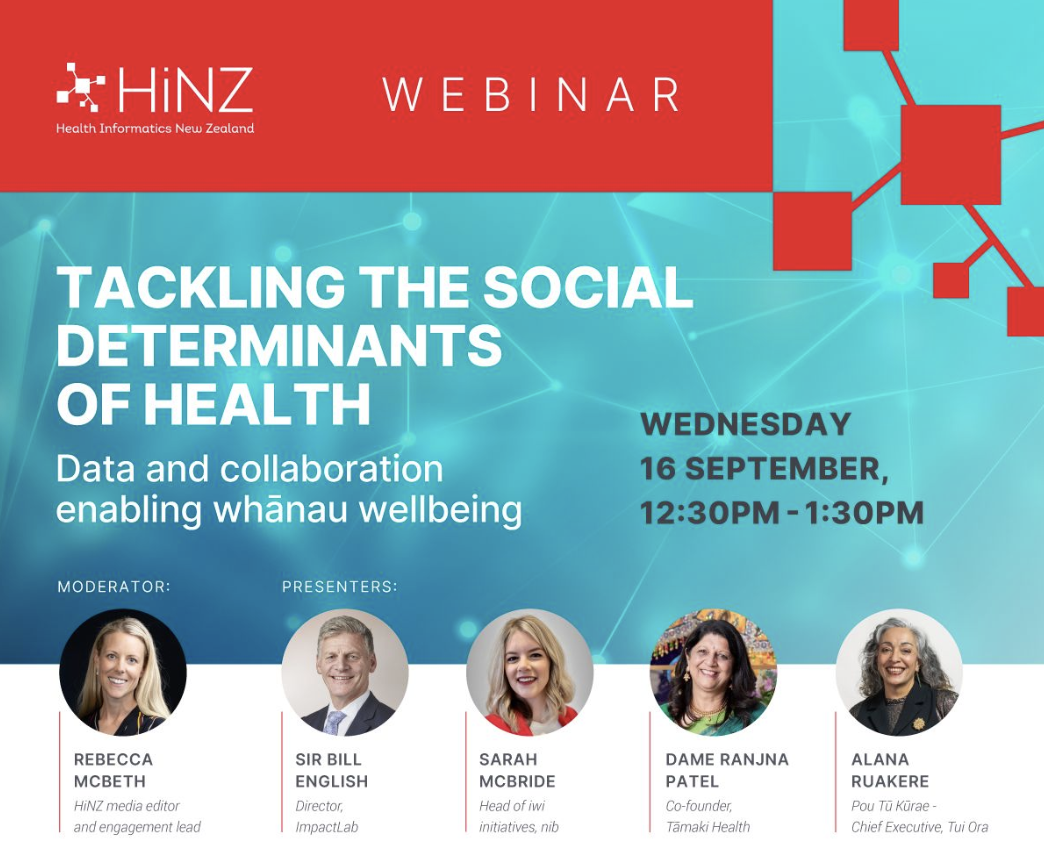
Webinar: HiNZ - Tackling the social determinants of health
ImpactLab Founder Sir Bill English is joining an expert panel to discuss how better connected data can drive more effective partnerships and evidence-informed decision making across the health and social care sectors.
.jpg)
Improving impact starts with using your data
The ‘use to improve’ principle is simple. It says: the best way to improve your data is to use the data you already have. Read on to find out more!
Practical tips for using your GoodMeasure report to secure funding
Many organisations measure their impact but struggle to talk about data findings with confidence. Here's what actually works, with practical tips from funders, fundraising experts, and charities who've done it.
.jpg)
What the SIA’s new Impact Measurement Standards mean for social investment
The standards give government agencies a clearer framework for deciding what evidence they need, how outcomes should be measured, and how that evidence can be used to improve programmes and services.
Get in touch
We help impact organisations know, show and grow their social impact. Let’s work together to do good, better!


